Your Questions, Answered
We’ve assembled the most frequently asked questions about Eversense into one place. Got a question that you can’t find the answer to? Contact us.
No. While you may optionally calibrate the Eversense® 365 system more frequently, (daily calibrations entries must be spaced at least one hour apart), this will not impact the accuracy of the system.
The best way for a user to support system accuracy is to calibrate as prompted and to always calibrate the system using only a finger stick blood sample. DO NOT calibrate at times when glucose may be rapidly changing (e.g., after meals, after dosing insulin). DO NOT use a blood glucose reading from an alternative site (such as forearm or palm) blood glucose reading to calibrate the system.
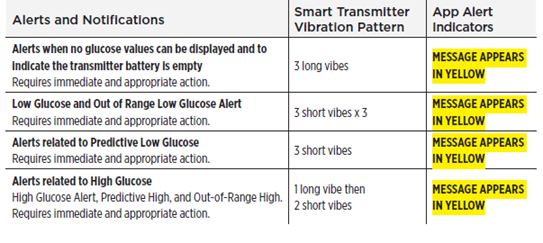
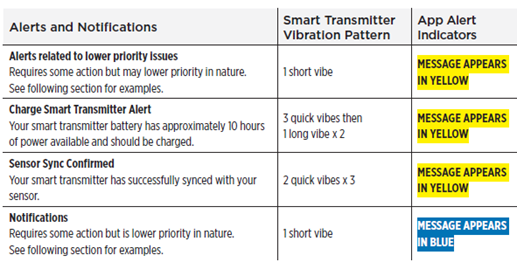
The Eversense® 365 Smart Transmitter will vibrate and the app will provide a “Transmitter Disconnected” notification every 5 to 30 minutes, and/or a status bar message, based on your sound settings, until the app is launched or the smart transmitter is reconnected. Once the connection is re-established, the data collected will sync with the mobile app and the graph will fill in.
When your mobile device is locked, or the App is running in the background, the alerts are recorded and kept active until you open the Eversense® 365 App. Once the App is opened, the previous alerts will appear and allow you to dismiss them. When this occurs in the future, check the time stamp on the alert to confirm when the alert happened.
Speak to your health care professional to determine your personal high and low glucose alert levels. Do not change your glucose alert levels without consulting with your health care professional.
The high and low glucose levels in the app are pre-set, but can be customized to your preferences. Based on the preset (default) glucose levels:
“HI” Reading Indicates a sensor glucose reading is greater than 400 mg/dL
“LO” Reading Indicates sensor glucose reading is less than 40 mg/dL
While factory calibration is possible for some short-term transcutaneous sensors that last 2 weeks or less, a long-term implantable sensor lasting up to 12 months - essentially 26 times longer - requires calibration to ensure the system provides the most accurate readings possible.
Still have questions?
The Eversense team is dedicated and ready to provide the answers and support you need. Simply click the link below.
The Eversense® 365 Continuous Glucose Monitoring (CGM) System is indicated for continually measuring glucose levels for up to one year in people (18 years and older) with diabetes. The system is indicated for use to replace fingerstick blood glucose (BG) measurements for diabetes treatment decisions. Fingerstick BG measurements are required for calibration one time a week after day 13, and when symptoms do not match CGM information or when taking medications of the tetracycline class. The sensor insertion and removal procedures are performed by a health care provider. The Eversense 365 CGM System is a prescription device; patients should talk to their health care provider to learn more.
For important safety information, see bit.ly/eversensesafety
Eversense, Eversense 365 Continuous Glucose Monitoring, and the Eversense logo are trademarks of Senseonics, Incorporated. All other trademarks are properties of their respective owners and are used solely for informative purposes. No relationship or endorsement should be inferred or implied.
Apple Watch® is a product of Apple, Inc., and may be separately purchased from an authorized Apple retailer. Apple Watch is not included with the Eversense CGM System. Android is a trademark of Google LLC.
MKT-001692 Rev 1


 Call My Eversense Specialist Now
 Schedule a Call